
Midwife or OB/GYN for Prenatal Care and Labor Support - Understanding the Differences + The Spiritual Tea
Have you ever wondered what the differences in care would be like with a Midwife verses an OB/GYN for prenatal care and labor support? This is a valid question and a priority one when it comes to preparing for your ideal labor, birth, and postpartum experience. Choosing a provider for your perinatal care can make a difference on your overall experience, and not all professionals are created equally.
The current, new “traditional” model of prenatal healthcare is rooted in the systematic control of OB/GYNs, nurses, and other hospital staff team members, but just a century ago, this was not the norm. Far before the hospitals were the main birthing place, midwives guided and led many babies earth-side through holistic practices. In support of informed decision making for birth, we are going to dive into these key differences between Midwifery and OB/GYN care.
By definition and training…
OB/GYNs are those medical doctors who study Obstetrics and Gynecology - all things female related. They are fully trained in medicine and surgery including (but certainly not limited to) C-sections. Typically, they will be practicing in a hospital setting, with a full supporting team of specialized professionals, all responsible for supporting the perinatal process in various ways.
Midwives are birth professionals who specialize in low-risk pregnancies and births. There are different types of midwives that practice: Certified Nurse Midwife (CNM), Certified Professional Midwife (CPM), and Traditional Midwives. Certified Nurse Midwives hold a nursing degree with additional midwifery education that meets a national accreditation standard. They typically practice in hospitals, oftentimes alongside OB/GYNs, as well as birthing centers and home births. Certified Professional Midwives receive direct entry midwifery training that is rooted in traditional, holistic practices. They are typically available for home births and standalone birthing centers, but are limited in availability as they are accredited through each individual state, and currently available in 30 states. A traditional midwife is one who does not have any formal accreditation and lean on traditional, ancestral knowledge to assist and support women through their labors and postpartum. These midwives are reserved for home birth settings due to their lack of systematic accreditation.
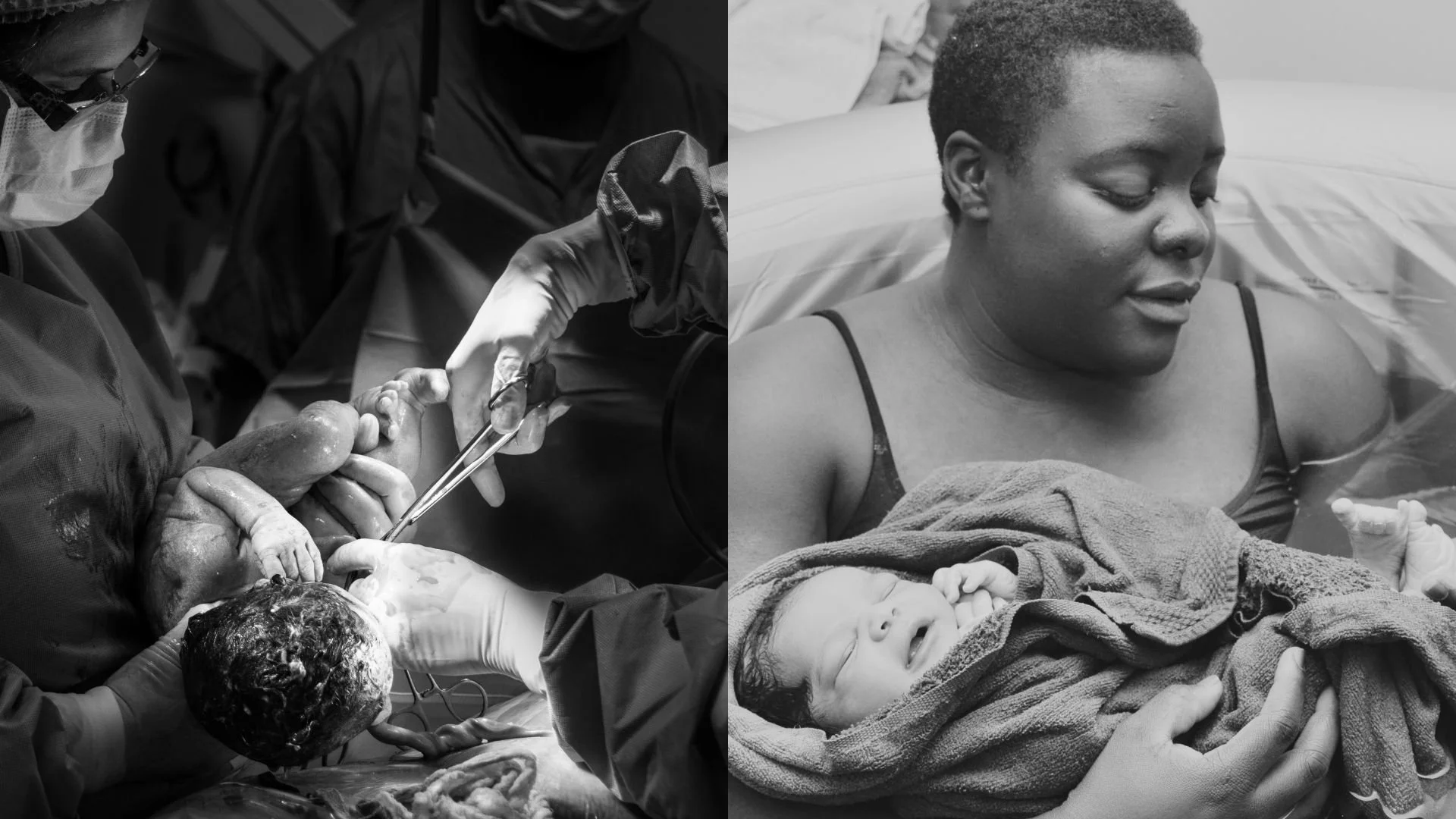
OB/GYNs are those medical doctors who study Obstetrics and Gynecology - all things female related. They are fully trained in medicine and surgery including (but certainly not limited to) C-sections. Midwives are birth professionals who specialize in low-risk pregnancies and births and are most commonly available in out-of-hospital settings. Choosing a provider is an important decision to lead to the desired birth outcomes, but it is important to not let fear guide this decision. Be informed and make the best decision on a provider for you.
Their Different Philosophies & Approach to Perinatal Care
When it comes to OB/GYNs, they tend to view pregnancy and birth as a process that requires close monitoring and intervention through a wide variety of standard tests and controlled birth timelines. This practice oftentimes minimizes and interferes with the physiological process of birth. Rigid hospital policies create timelines intended for legal purposes that supports the success of the hospital body. Their trainings allow them to be the specialist in high-risk pregnancies and managing surgical emergencies. (Note: What’s considered high-risk to some may be looked at as a specialty to others.)
As for midwives, they tend to lean more into flowing with the physiological birthing process, honoring the natural flow of labor and birth. Midwives tend to be reserved more for low-risk pregnancies and may (legally) require transferring to OB/GYN care if health complications arise. Due to their wide variances in where they practice, their philosophy and approach will differ based on education and organizational associations that may have a certain code of conduct to maintain. For example, CNMs that practice primarily in a hospital setting may support families wanting to have a more natural birth, but may still offer other medical interventions through the process in accordance with hospital policies.
(Note: What’s considered high-risk to some may be looked at as a specialty to others. There are trainings and professionals out there from both backgrounds that can support various high-risk birth concerns like twins, breech births, and some other conditions. Some midwives with more traditional teachings passed down may know how to effectively handle some “high-risk” concerns.)
What about time and continuity of care?
When choosing a provider, the time they spend with you throughout your perinatal journey varies widely based on the type of provider you choose. Standard OB/GYN care typically begins around 8-12 weeks after confirmed pregnancy tests. It is not uncommon to be asked to schedule your initial prenatal appointment closer to your second trimester - around week 12 or 13. This is because on average 1 in 4 pregnancies end in miscarriage, with 80% of miscarriages happen in the first trimester. The chances of miscarrying decreasing the farther along you are. A provider with a high demanding practice is less likely to see you earlier in your pregnancy, even if there are some strong concerns from the family for pregnancy vitality. Your prenatal visits may average at 15-minutes per appointment with your actual OB/GYN, and additional time seeing nurses and other assistants trained for various routine health checks.
During labor and birth, the OB/GYN is typically called close to the transition period of labor, and may not be your primary physician you’ve seen throughout your pregnancy, due to the rotating on-call schedule. Throughout your labor, you will be seen primarily by nurses on duty and likely to be a different staff than what you will see during your prenatal checkups. OB/GYNs will typically visit you each day of your hospital stay afterbirth, and then a 6-week postpartum appointment with your primary provider.
Midwives on the other hand tend to have smaller practices and limited availability for the number of clients they accept in a month’s time. They also have a more continual plan of prenatal and postpartum visits where you see much more of the same provider throughout your journey, including the birth. They go on-call for you on a set timeline, and tend to only rely on back-up midwife assistance for cases like overlapping births. They show up during active labor of the birth, and stay through stabilization of mom and baby in the early postpartum period, which can include transferring to a hospital in some cases. Midwives that offer birthing center or home birth support typically has more continuity of care and contracts that they create to fully prioritize and individualize your perinatal experience. They offer more opportunities for autonomy without creating routine processes, especially if they are one that is not a part of a hospital body. You’re looking at more one-on-one meetings, averaging at 1-hour in length with the same provider and for some, that time difference can make a huge difference on your confidence of your birthing process.
Pain Management Options and Considerations
There are no doubts about it that when it comes to pain management, OB/GYNs and hospitals provide a much wider range of options as compared to midwives. With the hospital staff, it is common to have many IV pain medication options given by nurses on staff, and an anesthesiologist which is able to administer the most common form of hospital birth pain management - epidurals. Some hospitals and birthing center midwives can provide laughing gas as a method of pain management. Generally speaking, though, the more traditionally-rooted midwives may provide non-medical methods of pain management modalities that help ease the birth along.
Interviewing and choosing a provider is important in this case to see some differences available. If pain is a strong concern, consider hiring a doula that may have more specialty and hands-on support to manage pain effectively.
Intervention Rates
This is something that’s going to vary and may require some extra research on your behalf to truly discover the differences between available providers in your area. In general, OB/GYNs have higher rates of interventions such as continuous fetal monitoring, cervical checks, labor inductions, episiotomies, and C-Sections. On the other hand, research consistently shows that midwife-led care is associated with lower interventions while having no increase in adverse outcomes. Again, this goes with the general care model leaning towards natural, physiologically occurring birth processes. Letting nature do its job as much as possible.
Cost and Insurance
This tends to be a big concern that comes up a lot as a priority for people choosing to have a home or hospital birth - Cost and Insurance coverage. When it comes to insurance, OB/GYNs are widely covered by various insurance plans. What part of services that are included for routine care will vary by plan and so this will be something to specifically request a breakdown of services and coverage terms if the costs are important for you. Midwives associated with the hospital groups and some birthing centers will accept insurance, but if you’re leaning towards a home birth setting, you may have some difficulties getting this covered by insurance. In addition to this, some providers - both OB/GYNs and Midwives - will reserve a limited amount of space for special plans such as Medicaid (low-income, government provided insurance). Choosing a provider even before pregnancy can be valuable to budget and plan for variances in your birth plan, and I highly recommend gaining clarity on how your benefits will change postpartum as well. All plans are not created equally, and sometimes there are wide jumps in monthly insurance premiums after the birth of just one child.
Special Considerations + The Spiritual Tea
A few things that I find note-worthy to think about and consider:
Gestational age does not automatically mean you need to have a hospital birth. Despite the topic surrounding “Geriatric Pregnancies” - those occurring after 35 years of age - being older during your pregnancy does not mean immediate OB/GYN care and hospital birth. An overall assessment of one’s health, activity, and pregnancy history can influence the acceptance rate with a midwife.
Previous pregnancies are not an end all be all indicator of future birth outcomes. Just because you had a C-section previously does not mean that you are limited to that option in future births. The general recommendation of an OB/GYN would be to not risk the chance of a failure to progress labor, or uterine rupture, whereas many midwives will confidently step in to support women choosing alternatively for their births. There are many success stories of women having VBACs - vaginal births after cesarean - and even HBACs - home births after cesarean. In addition to this, a previous miscarriage does not automatically mean you have an incompetent cervix and need increased monitoring. Understanding your individual circumstances are very important, and a provider that explores this with you to help make an informed decision about a care plan is very valuable. Depending on the chosen birthing location and proximity to a hospital, there may be more opportunities for individualized care outside of a hospital.
Breeched Babies and Twin Birth are possible without C-Section. This is one that is commonly mentioned and brought up when people are preparing to give birth. While OB/GYNs are known to handle breech babies and twin/multiples with automatic c-section, there are still some providers that will allow a trial of labor without induction or automatic c-section surgery. You may generally find that more midwives have additional training to manage these cases, with many success stories to back their confidence and that offering.
Everything is spiritual, and the energy and beliefs you hold surrounding birth and labor will overall impact your experience. Being informed is a large part of overcoming limiting beliefs surrounding birth and labor, and when you take time to get informed and educated about the natural process of birth, the more likely you are to align with minimal interventions. Getting a supportive and educated team of doula and midwife could lead to a transformative birth experience that puts you at the head of your process and care. Experiencing birth confidently comes with having more information, and creating a plan above all guides the process should challenges arise. I strongly consider pregnancy, labor, and birth to be a mind-over-matter process. How you choose to view the situation influences the outcome of the process.
All-in-all, choosing a perinatal care provider and birth setting requires an individual evaluation of self-health, knowledge, and overall confidence in the birthing process. This decision should be rooted in educational knowledge and never from a place of fear. If there are any fears surrounding birth, I highly recommend getting to the root of your concern. For help with this, I walk you through the process of addressing and overcoming your fears among other things with my Prenatal Journal Challenge, available for download here.
I hope that this post has assisted and helped bring clarity to your process in some way. It is my goal to support families in birthing confidently and making informed decisions. If you found this blog to be helpful to you in some way, please share with other families that may be expecting or planning their own pregnancy so that they can get ahead of the process. Subscribe to the site for more informational content surrounding holistic and spiritual pregnancy practices.
With love and gratitude, Jemila